
A car that has been in an accident is worth less on the used car market than one without accident damage, even if it has been professionally repaired. Buyers fear hidden damage, and the seller must disclose significant accident damage when selling. In German law, this loss of value is called the merkantiler Minderwert, the mercantile reduction in value. The liability insurer of the other party must pay it in addition to the repair costs, even if you do not intend to sell the vehicle at all.
At a glance
- What compensation for the lower market value after significant accident damage
- When also without a sale, not excluded for older vehicles either
- How much estimated by the expert in the report, on the basis of net prices
- When not for minor damage and in the case of an economic write-off
When you are entitled to diminished value
The German Federal Court of Justice has granted compensation for diminished value in settled case law since 1958. It is to be compensated in money under § 251(1) BGB, because the stigma of being an accident car cannot be removed by any repair. It does not matter what you intend to do with the vehicle. Whether you sell it, keep driving it or scrap it in ten years has no bearing on the claim (most recently BGH, judgments of 16 July 2024, VI ZR 239/23 and VI ZR 243/23).
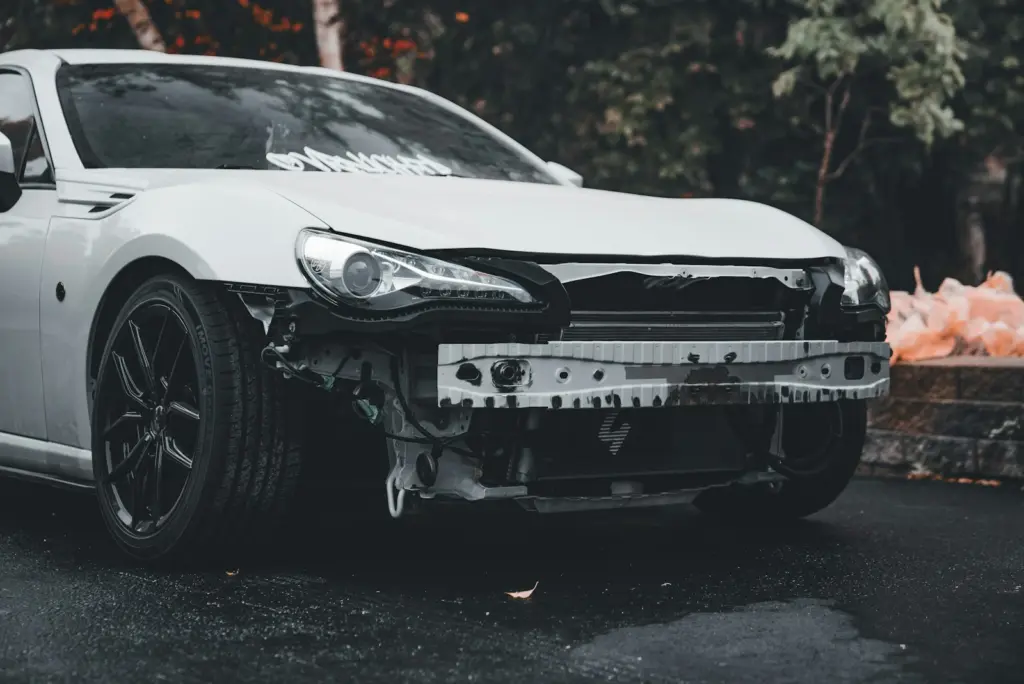
The requirement is significant damage. If only bolt-on parts such as a bumper or a wing mirror were replaced or a small paint defect was touched up, experts usually do not assess any diminished value. Typical cases with diminished value are damage to load-bearing parts, bodywork that had to be straightened or welded, or damage where airbags were deployed.
You are entitled to diminished value even if you keep your car. The claim does not depend on a sale.
How diminished value is calculated
The amount is estimated by the expert. The basis is a notional sale: what would the vehicle have fetched immediately before the accident, and what does it fetch as an accident car after professional repair? Experts use various methods for this. The older and still widespread method according to Ruhkopf and Sahm works with percentages of the repair costs and the replacement value. Newer methods take greater account of the market for the specific model, such as the market relevance and factor method (MFM). Courts are not bound to any particular method and estimate the amount under § 287 ZPO.
A 2024 decision of the Federal Court of Justice is important for the calculation. According to it, diminished value is to be estimated on the basis of net sale prices. If the expert calculated on the basis of gross prices, the amount is to be reduced by the VAT share (BGH, judgment of 16 July 2024, VI ZR 243/23). Since then, insurers have often made a flat deduction. Whether this is justified depends on how the report calculated the figure. That can be checked.
Older vehicles and high mileage
For a long time, the rule of thumb was that there was no diminished value for vehicles over five years old or with more than 100,000 kilometres. It no longer holds. As early as 2004, the Federal Court of Justice pointed out that the used car market has changed and that vehicles are driven and traded for longer (judgment of 23 November 2004, VI ZR 357/03). The decisive question is whether a buyer would pay less for the specific vehicle because of the accident. For a well-maintained vehicle with a high residual value, this is often the case even after eight or ten years. For very old vehicles with a low value and previous damage, it becomes more difficult.
If the insurer rejects diminished value solely because of age or mileage, it is worth taking a second look.
When the insurer makes cuts
The most common objections raised by insurers are alleged minor damage, previous damage to the vehicle, the age of the vehicle and, since 2024, the VAT deduction. Some insurers send a review report from their own service provider that sets the diminished value lower or deletes it. Such a review report is not an expert report and does not replace an inspection of the vehicle. You do not have to accept it.
If you instructed your own expert, the diminished value will be stated in that report. If it is missing although there is significant damage, ask. If the insurer sent the expert, you should read the result particularly critically.
What you should check
- Diminished value stated in the report or expressly rejected
- Reasons, if no diminished value was assessed
- Net or gross calculation recognisable
- Previous damage stated correctly, not assumed across the board
- Compare the insurer’s settlement with the report
Leasing and financing
With a leased vehicle, the car belongs to the leasing company. As the owner, it is entitled to the diminished value. Leasing contracts usually provide that the lessee settles the claim and passes the diminished value on to the leasing company. Anyone who does not claim the diminished value often pays it themselves when returning the car at the end of the contract, because the accident damage then lowers the residual value. Similar rules apply to financed vehicles transferred to the bank as security. More on leased vehicles on our page Warranty for leased vehicles.
Diminished value, write-off and shared liability
In the case of an economic write-off, there is no separate diminished value, because you receive the replacement value. For a repair within the 130 per cent limit, on the other hand, the diminished value is included when checking whether the limit is complied with. See our page Write-off or repair. If you share liability, the diminished value is reduced according to the liability ratio like any other head of damage.
How we proceed
We check the report and the insurer’s settlement, claim any wrongly reduced diminished value and, if necessary, enforce it in court. After an accident that was not your fault, the other side’s insurer bears the legal fees. You can find the other heads of damage after an accident on our pages Road accidents and claims settlement and Loss of use and hire car.
Your contact
 Christian SchmidtEmployed lawyerCar purchase warranty law · Employment law · General civil lawView profile
Frequently asked questions
Do I get diminished value even though I want to keep my car?
Yes. The claim does not depend on whether you sell. What is compensated is the lower market value, which exists regardless of your plans.
How high is diminished value typically?
That depends on the value of the vehicle, its age and the type of damage. The range extends from a few hundred euros for older vehicles to several thousand euros for young, high-quality vehicles with serious damage. Only the estimate in the report is binding.
My car is seven years old. Is there still diminished value?
Possibly, yes. The old limit of five years or 100,000 kilometres no longer applies rigidly. The decisive question is whether the accident noticeably lowers the sale price of the specific vehicle.
Do I have to disclose the accident when I sell later?
Yes, you must inform the buyer of significant accident damage even without being asked. Anyone who conceals it risks the sale being rescinded for fraudulent misrepresentation. That is exactly why diminished value exists.
The insurer deducted part of the diminished value because of VAT. Is that correct?
Only if the expert estimated the diminished value on the basis of gross prices. If the expert already calculated net, a further deduction is wrong. This can be seen from the report.