
A hunting lease usually binds the parties for nine years or longer. During this time, game populations, cultivated areas, rents and sometimes the relationship between tenant and hunting cooperative change. Disputes almost always arise over the same points: game damage, the boundaries of the hunting ground, hunting facilities and whether and how the lease can be terminated early. A carefully drafted lease prevents this.
Lawyer Frauke Schönbrunn reviews and drafts hunting leases for tenants, hunting cooperatives and owners of private hunting grounds, mainly in the Rhineland, and represents them in disputes arising from existing leases.
Hunting leases in figures
- 9 yearsstandard minimum lease term, in NRW down to five years in justified cases
- 3 yearsannual hunting licence before the first lease
- 1,000 hamaximum area per tenant including paid hunting permits
- 3 weeksobjection period of the hunting authority after notification
Legal framework
Hunting leases are governed by the Federal Hunting Act (Sections 11 to 14 BJagdG) and supplemented by the state hunting acts, in North Rhine-Westphalia by the North Rhine-Westphalia Hunting Act (LJG-NRW). In addition, the provisions of the German Civil Code on leases (Sections 581 et seq. BGB) apply unless the lease provides otherwise. In joint hunting districts the lessor is the hunting cooperative, i.e. all the landowners together; in private hunting districts it is the owner.
Written form is mandatory
A hunting lease concluded or extended orally is void (Section 11(4) and (6) BJagdG). This also applies to a handshake when extending the lease.
Requirements for validity
The hunting lease must be concluded in writing (Section 11(4) BJagdG). A lease agreed only orally is void (Section 11(6) BJagdG). This also applies to subsequent material changes, for example to the boundaries of the hunting ground or the rent. The lease is also void if, when concluded, it breaches the provisions on partial leasing, the maximum area or eligibility to lease.
Only a person who holds an annual hunting licence and has previously held an annual hunting licence in Germany for three years may be a tenant (Section 11(5) BJagdG). The total area on which a tenant is entitled to hunt may not exceed 1,000 hectares. Paid hunting permits are included in this (Section 11(3) BJagdG). The North Rhine-Westphalia Hunting Act also limits the number of tenants per hunting ground. A lease that does not comply with this limit is also void (Sections 11, 15 LJG-NRW).
Lease term
The lease term should be at least nine years, and the states can set a longer minimum term (Section 11(4) BJagdG). North Rhine-Westphalia permits a reduction to as little as five years in justified cases (Section 9(2) LJG-NRW). An extension of an existing lease may also be shorter. The start and end should coincide with the hunting year, which runs from 1 April to 31 March. A term that is too short does not make the lease void, but the hunting authority can object to it.
Notification to the hunting authority
The lease must be notified to the lower hunting authority (Section 12 BJagdG). In North Rhine-Westphalia, the tenant must submit the lease and state the size of the area within one month of conclusion (Section 13(3) LJG-NRW). Every later change must also be notified within one month (Section 14 LJG-NRW). The authority can object to the lease within three weeks of receipt, for example if the lease term has not been observed or proper game management is not to be expected. The tenant may not hunt before these three weeks have expired, unless the authority permits it earlier.
What belongs in the lease
Most leases are based on templates from the state hunting associations, the chamber of agriculture or the municipalities. These templates are a useful basis, but do not cover everything that matters in a specific hunting ground. The starting point is a precise description of the hunting ground with a map and area, including pacified districts and areas that may be added or removed later. For the rent, the lease should regulate how it changes if the hunting ground becomes smaller or less suitable for hunting due to building, road construction or wind turbines. Without such a provision, all that remains is a rent reduction under lease law, the amount of which will then be disputed.
The most important clause in practice concerns game damage. By law, the hunting cooperative is liable for game damage caused by cloven-hoofed game, wild rabbits and pheasants. If the tenant assumes the liability in the lease in full or in part, he is liable. The hunting cooperative is then only liable to the extent that the injured party cannot obtain compensation from the tenant (Section 29(1) BJagdG). Full assumption, a cap at an annual maximum or a flat-rate game damage payment are common. For tenants in hunting grounds with a lot of maize and wild boar, unlimited assumption is a considerable financial risk. More on this on the page Game damage.
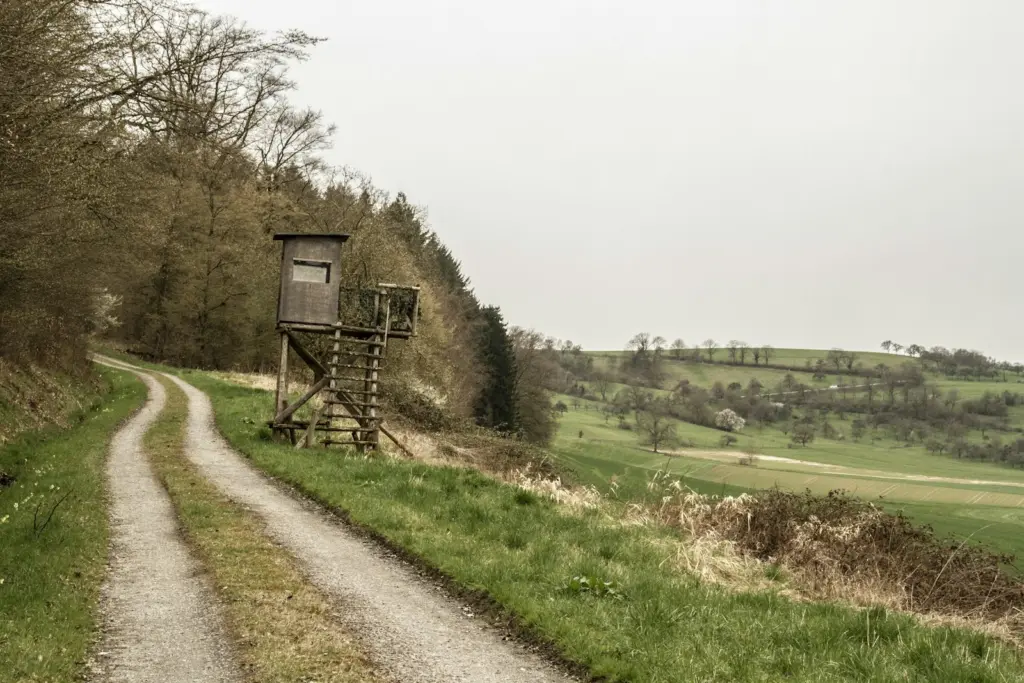
The lease should also specify whether and how many hunting permits the tenant may grant to third parties. In North Rhine-Westphalia, paid hunting permits must be in writing (Section 12(3) LJG-NRW). For hunting facilities such as high seats, bait sites and game fields, locations, the landowners’ consent and removal at the end of the lease must be regulated. Finally, every lease with several tenants needs a clause on what applies on the death or loss of eligibility of a co-tenant.
The most important clause in practice concerns game damage.
Resolutions of the hunting cooperative
In joint hunting districts, the meeting of the hunting cooperative decides on the lease. A resolution requires a double majority: a majority of the members present and represented and a majority of the land area represented at the vote (Section 9(3) BJagdG). Errors in the invitation, in determining the majorities or in representation by proxies can make the resolution open to challenge. We advise boards of hunting cooperatives on preparing meetings and members who consider a resolution to be flawed.
Early termination
A fixed-term hunting lease cannot be terminated with ordinary notice. It only ends early by mutual agreement, by extraordinary termination for good cause or by operation of law. It expires by operation of law if the tenant’s hunting licence is finally withdrawn, or if his hunting licence has expired and the authority has finally refused a new one (Section 13 BJagdG). If the tenant is at fault, he must compensate the lessor for the loss. Any tenant affected by a reliability check should therefore act early, see Reliability under hunting and firearms law.
Good cause for extraordinary termination can be substantial payment arrears, a serious breach of contractual obligations or a relationship so deeply broken down that continuation is unreasonable. The courts apply a strict standard. Anyone wishing to terminate should first issue a warning and carefully document the reasons. An invalid termination can itself give rise to claims for damages.
In private hunting districts, the purchaser of a sold property takes over the existing lease (Section 14 BJagdG in conjunction with the tenancy law provisions). In joint hunting districts, a change of ownership does not affect the lease, because the hunting cooperative remains the lessor.
Your contact
 Frauke SchönbrunnLawyerEmployment law · Hunting lawView profile
Frequently asked questions
We only extended the lease with a handshake. Is that valid?
No. An extension of a hunting lease must also be in writing. Without a written agreement, the extension is void, and after the original lease term the tenant hunts without authorisation. Make up for the written agreement and notify it to the hunting authority.
Can the hunting cooperative increase the rent during the term?
Only if the lease contains an adjustment clause or both sides agree. A unilateral increase is not possible.
As tenant, do I have to compensate game damage without limit?
Only if you assumed this in the lease. Many leases provide for full assumption. Before concluding the lease, you should check how high game damage was in previous years and negotiate a cap or a flat rate.
What happens to the lease if a co-tenant dies?
That depends on the lease. Without a provision, difficult questions arise because the heirs are often not eligible to lease. A clear clause on whether the remaining co-tenants continue the lease belongs in every lease with several tenants.
Do you also review leases for hunting cooperatives?
Yes. We advise boards of hunting cooperatives on drafting leases, on tenders and awards, on meeting resolutions and on disputes with tenants.