
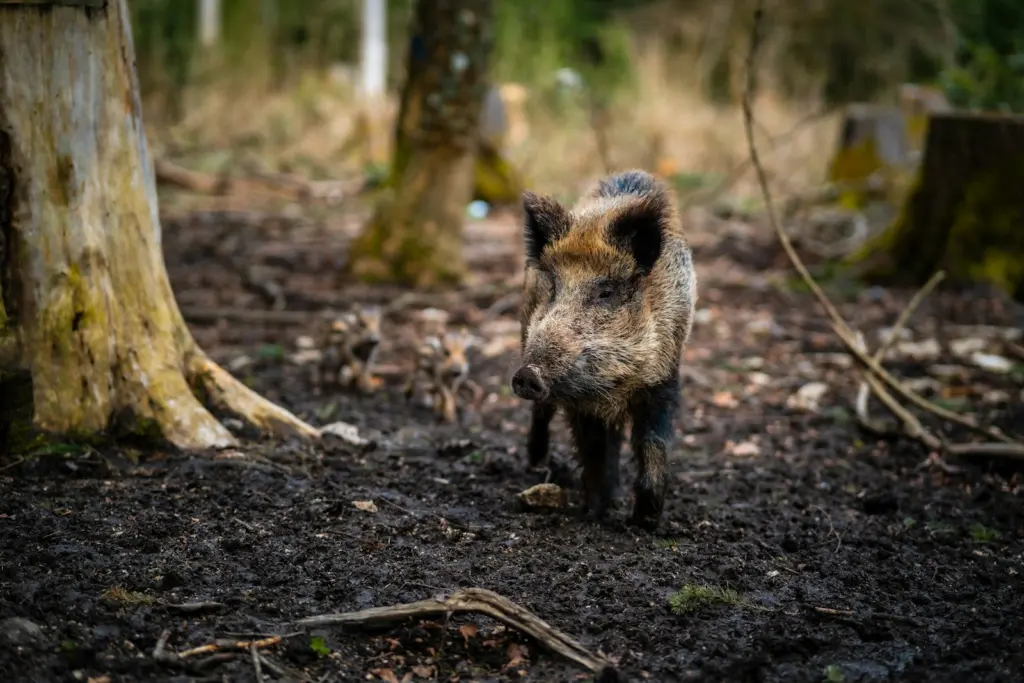
A sounder of wild boar can plough up a maize field or a meadow in a single night, and in the forest browsing and bark stripping prevent young trees from growing. There is a statutory obligation to compensate game damage, but also a strictly formalised procedure with short deadlines. Anyone who misses the notification deadline loses their claim, no matter how high the damage.
Lawyer Frauke Schönbrunn represents farmers, forest owners, hunting tenants and hunting cooperatives in the Rhineland in asserting and defending game damage claims, in the preliminary procedure before the municipality as well as in court.
At a glance
- Notification deadline one week from knowledge, for forests by 1 May and 1 October
- Competent authority municipality where the land is located
- Compensable game cloven-hoofed game, wild rabbits, pheasants
- Deadline for action two weeks after service of the minutes
What damage is compensated
Compensation is paid for damage caused to land by cloven-hoofed game, wild rabbits or pheasants (Section 29(1) BJagdG, Federal Hunting Act). Cloven-hoofed game includes wild boar, roe deer, red deer, fallow deer, mouflon and some other species. Damage caused by other animals, such as badgers, raccoons, crows, pigeons or wild geese, is not compensable under the Federal Hunting Act. The North Rhine-Westphalia Hunting Act empowers the competent ministry to extend the obligation to further species by regulation (Section 32 LJG-NRW). To determine whether there is a claim at all, it is therefore often decisive which animal caused the damage. Tracks, droppings and feeding marks should be photographed while they are still visible.
Damage to produce that has already been separated but not yet harvested is also compensated (Section 31(1) BJagdG). If a crop is damaged before harvest, the damage is to be compensated as it presents itself at the time of harvest. It must be taken into account whether, in accordance with the principles of proper management, the damage can be offset by resowing in the same year (Section 31(2) BJagdG). The costs of resowing are then compensable.
For vineyards, gardens, orchards, tree nurseries, avenues, individual trees, forest plantations with tree species that do not otherwise occur in the hunting ground, and open-field plantings of garden or high-value commercial crops, game damage is only compensated if customary protective devices were in place (Section 32(2) BJagdG). Anyone planting an orchard or a Christmas tree plantation should therefore fence it or provide individual protection from the outset.
Who is liable
For land in a joint hunting district, the hunting cooperative is liable (Section 29(1) BJagdG). In most hunting leases, however, the tenant has assumed liability in full or in part. He is then liable, and the hunting cooperative only to the extent that the injured party cannot obtain compensation from the tenant. For land attached to a private hunting district, the owner or usufructuary of the private hunting district is liable (Section 29(2) BJagdG). If the damaged land itself lies in a private hunting district, for example because a farmer leases fields from an estate, compensation depends on the contract between him and the person entitled to hunt (Section 29(3) BJagdG).
The person entitled to compensation is the one who suffers the damage, i.e. for leased land usually the farmer working it and not the owner.
The notification deadline
The claim lapses if the injured party does not notify the damage within one week of becoming aware of it or of when he would have become aware of it with due care (Section 34 BJagdG). Courts treat this deadline as a substantive cut-off period, and there is no reinstatement. Anyone who does not check their land for a long time cannot claim to have noticed the damage only late. For damage to land used for forestry, it is sufficient to notify the damage twice a year, by 1 May and by 1 October.
In North Rhine-Westphalia, the competent authority is the municipality in whose area the damaged land is located (Section 34 LJG-NRW), usually the public order office. There is an official form for the notification. The notification should state the land, crop, presumed species and the date of becoming aware, and should be made in writing with proof of receipt. Informing only the hunting tenant is not sufficient. Many farmers nevertheless inform the tenant immediately so that he can step up hunting, and that makes sense.
Anyone who does not report the damage within one week of becoming aware of it loses the claim. There is no reinstatement.
The preliminary procedure in North Rhine-Westphalia
Before bringing an action, the preliminary procedure before the municipality must be completed (Section 35 LJG-NRW). The municipality invites the parties to a meeting at the site of the damage (Section 37 LJG-NRW) and tries to bring about an amicable settlement. A settlement is recorded in minutes from which enforcement is possible as from a judgment (Section 38 LJG-NRW). If no settlement is reached, a game damage assessor is called in at the request of a party. He determines the damage and prepares an expert report stating the type of crop, the species, the extent and the amount of damage (Section 39 LJG-NRW). On this basis, the municipality makes a second attempt at settlement.
If this also fails, the parties are served with minutes recording the failure of the preliminary procedure. From service, a mandatory two-week deadline (Notfrist) runs within which the injured party must bring an action before the competent court (Section 41 LJG-NRW). This deadline is also short and cannot be extended. If the municipality refuses to conduct the procedure because the damage was notified late or is not compensable, it must inform the parties by a reasoned decision.
Game damage in NRW: how the procedure works
- Notificationwithin one week in writing to the municipality
- Site meetingthe municipality invites all parties to the site
- Assessmentgame damage assessor prepares a report on request
- Settlement or minutesenforceable settlement or record of failure
- Actiontwo-week mandatory deadline from service
Representation in the procedure
The outcome is often decided at the meeting at the site of the damage. We prepare it with you, check photos, area data and yield figures and accompany you to the meeting where larger amounts are at stake. For farmers, the aim is to record the damage completely, including consequential losses such as reduced yields in subsequent years on grassland. For tenants and hunting cooperatives, we check whether the deadline was met, whether the damage was actually caused by compensable game and whether the injured party may be contributorily at fault, for example because the harvest was delayed without reason or available protective devices were not used.
Many disputes can be avoided by arrangements outside the formal procedure, for example on hunting strips in maize, joint inspections of the hunting ground before harvest or a flat-rate game damage payment in the hunting lease. Notes on drafting leases can be found on the page Hunting leases.
Hunting damage
Game damage must be distinguished from hunting damage, i.e. damage resulting from improper hunting, for example driving over cultivated fields, a driven hunt through ripening grain or damaged fences. The person entitled to hunt is liable for this, including damage caused by his gamekeeper or his hunting guests (Section 33(2) BJagdG). The same rules on notification and the preliminary procedure apply as for game damage.
Your contact
 Frauke SchönbrunnLawyerEmployment law · Hunting lawView profile
Frequently asked questions
I only reported the damage after ten days. Is the claim lost?
If you knew about the damage, or should have noticed it with due care, more than a week before notifying it, yes. What matters is when you noticed the damage or should have noticed it. It is worth examining the circumstances carefully before giving up the claim.
Can I claim the game damage directly from the hunting tenant?
You can reach an agreement with him directly, and in practice this often happens. However, this does not replace notification to the municipality. Notify the damage within the deadline, even if you expect an agreement.
Who pays the game damage assessor?
The municipality sets the assessor’s fee and its own expenses. If no settlement is reached, it allocates these costs between the parties at its reasonable discretion. The parties bear their own costs, for example for a lawyer in the preliminary procedure, themselves (Section 40 LJG-NRW).
Is damage caused by wild geese compensated?
Not under the Federal Hunting Act, because geese are neither cloven-hoofed game nor pheasants or wild rabbits. Whether other compensation schemes apply in individual cases, for example via support programmes for goose resting areas, must be examined separately.
Do I as a farmer have to take protective measures?
For special crops such as fruit, vines, nurseries and gardens yes, otherwise compensation is excluded. For normal arable crops there is no general duty to put up protective devices. However, conduct that unnecessarily increases the damage can be taken into account as contributory fault.